Most businesses today talk about data, but not all of them truly understand what happens behind the scenes to make that data usable. Dashboards, reports, and analytics don’t appear by magic. There is a foundation underneath all of it, and that foundation is data engineering. When people ask what is data engineering, the simplest answer is this: it is the work that makes data reliable, organised, and ready to use.
At LabH IT Services, we often meet teams who know data is important but feel frustrated by how messy it can be. Reports don’t match. Systems don’t talk to each other. Teams spend more time fixing data than using it. That frustration usually points back to weak data foundations. Data engineering exists to solve exactly that problem. It brings structure to chaos and makes data something businesses can actually trust.
Why Modern Businesses Can’t Ignore Data Engineering?
Data volumes are growing fast
Businesses collect data from everywhere now. Customer interactions, transactions, operations, marketing tools, and internal systems all generate information constantly. Without engineering, that data quickly becomes overwhelming.
Poor data slows decisions
When teams don’t trust the numbers, everything slows down. Decisions get delayed. Meetings turn into debates about accuracy instead of progress.
Growth exposes weaknesses
Manual processes might work early on, but as companies grow, those shortcuts break. Data engineering helps businesses scale without losing control.
These issues don’t always feel urgent at first, but over time, they limit performance.
What Data Engineering Actually Involves?
Data engineering isn’t about one tool or one task. It’s a set of practices that support how data moves through a business.
In practical terms, what is data engineering comes down to a few core activities:
- Collecting data from different systems
- Cleaning and validating that data
- Transforming it into usable formats
- Storing it in structured environments
- Making it available for reporting and analytics
When this work is done well, teams rarely notice it. They just experience smoother reporting and more reliable insights.
The Difference Between Data Engineering and Analytics
Many businesses mix these two concepts, but they serve different purposes.
Data engineering builds the foundation
Engineers focus on pipelines, storage, and data quality. Their job is to make sure data arrives in the right place, in the right format, at the right time.
Analytics uses the data
Analysts and decision-makers use engineered data to identify trends, measure performance, and plan actions.
Without strong engineering, analytics becomes fragile. Reports break, numbers change, and confidence drops.
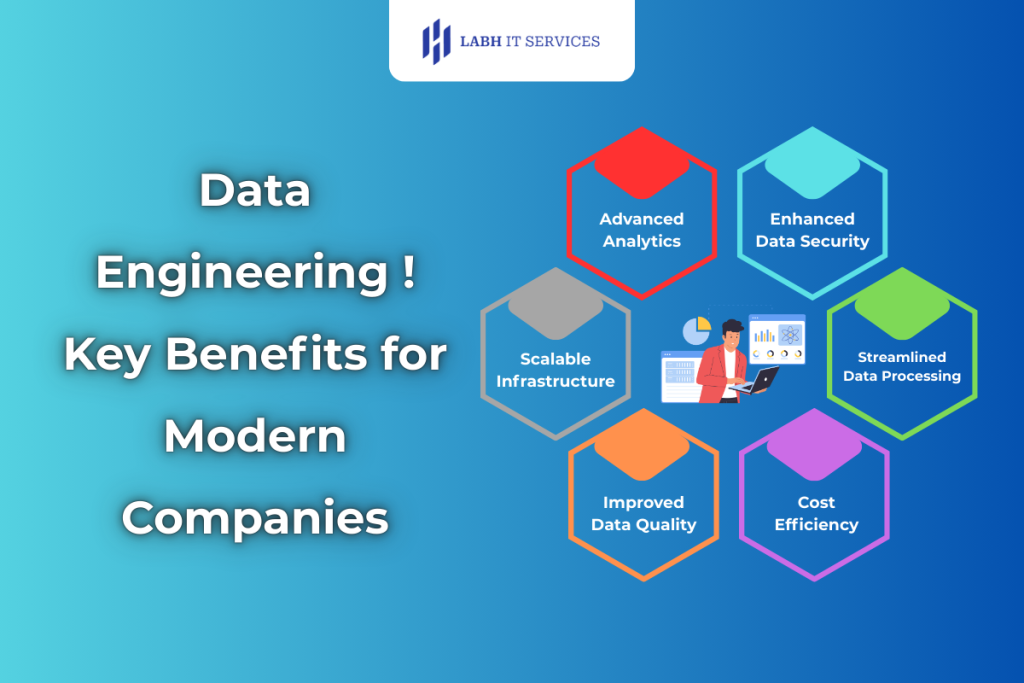
Key Benefits of Data Engineering for Businesses
Strong data engineering has a noticeable impact across the organisation.
Reliable data
Teams work from consistent, trustworthy information.
Faster reporting
Well-built pipelines reduce delays and manual work.
Better collaboration
When everyone uses the same data, alignment improves naturally.
Scalability
Systems handle growing data volumes without constant rework.
Reduced risk
Automation and validation reduce errors and inconsistencies.
Each benefit supports better decision-making over time.
Why Data Engineering Matters More in Modern Companies?
Modern businesses operate in real time. Decisions need to be fast, informed, and confident. Data engineering supports that pace.
Always-on data access
Teams no longer wait days for reports.
Stronger governance
Data access and usage become more controlled and secure.
Support for advanced use cases
From automation to machine learning, none of it works well without solid data foundations.
This is why data engineering is no longer optional for growing organisations.
The Role of Data Engineering in Business Strategy
Data engineering doesn’t sit in isolation. It supports strategic planning across departments.
Operations
Clear data highlights inefficiencies and bottlenecks.
Finance
Accurate data support budgeting, forecasting, and risk management.
Sales
Clean pipelines improve visibility into performance and targets.
Leadership
Reliable insights support long-term planning.
When strategy relies on data, engineering becomes a critical enabler.
How We Approach Data Engineering at LabH IT Services?
In the middle of most projects, we notice something important. Businesses don’t usually lack tools. They lack structure. At LabH IT Services, we start by understanding how data is currently flowing through the business. Where does it come from? Where does it get stuck? Where does it lose accuracy?
We then design pipelines that fit real workflows, not theoretical ones. The aim is always clarity. When data engineering is done right, teams stop thinking about the data itself and start focusing on what it’s telling them.
Why Data Engineering Is Growing in the UK Market?
Many organisations are now actively investing in data engineering uk solutions as they modernise their systems.
Cloud adoption
More businesses are moving data into cloud environments, increasing the need for proper engineering.
Regulatory pressure
Clear data handling and governance are becoming more important.
Competitive advantage
Companies that use data well respond faster to change.
This shift has made data engineering a priority rather than a background task.
Common Challenges Data Engineering Helps Solve
Without engineering, businesses often struggle with:
- Conflicting reports across departments
- Slow or manual data preparation
- Inconsistent definitions of metrics
- Poor data quality
- Limited scalability
Engineering doesn’t remove all challenges overnight, but it gives businesses a framework to address them steadily.
Data Engineering and Long-Term Growth
Growth puts pressure on systems. Data engineering helps businesses prepare instead of reacting.
Systems that scale
Pipelines expand with data volumes.
Faster onboarding of new tools
New systems integrate more smoothly.
Better long-term planning
Historical data remains usable and consistent.
With strong foundations, growth feels more controlled.
Why Data Engineering Supports Better Analytics?
Analytics depends on quality input. Data engineering ensures that input is clean and consistent.
Fewer errors
Automated checks catch issues early.
Faster insights
Analytics tools work more efficiently.
More confidence
Teams trust what they see.
This trust is what turns analytics into a daily habit.
Data Engineering as a Competitive Advantage
Data becomes a competitive advantage only when it’s usable. Data engineering makes that possible.
With data engineering uk practices in place, businesses can:
- Respond faster to market changes
- Improve operational efficiency
- Support advanced analytics
- Make evidence-based decisions
It shifts data from a technical concern to a strategic asset.
Move Forward with LabH IT Services
If your business is trying to make better use of data but feels held back by inconsistency or complexity, data engineering is the right place to start. With the right foundations, everything built on top becomes easier.
At LabH IT Services, we help businesses understand what data engineering is and implement practical data engineering uk solutions that support clarity, growth, and confidence.
Contact us to get started.
FAQs
What are the benefits of data engineering?
It improves data quality, speeds up reporting, and supports better decision-making.
Is AI replacing data engineers?
No, AI supports data engineers but still relies on strong data foundations built by people.
Why is data analytics important for modern businesses?
It helps businesses understand performance, customers, and trends clearly.
What is big data analytics, and its importance in modern industries?
It analyses large data sets to uncover patterns that support innovation and efficiency.
What is the role of data analytics in modern marketing?
It helps marketers understand customer behaviour, measure campaigns, and optimise strategies.