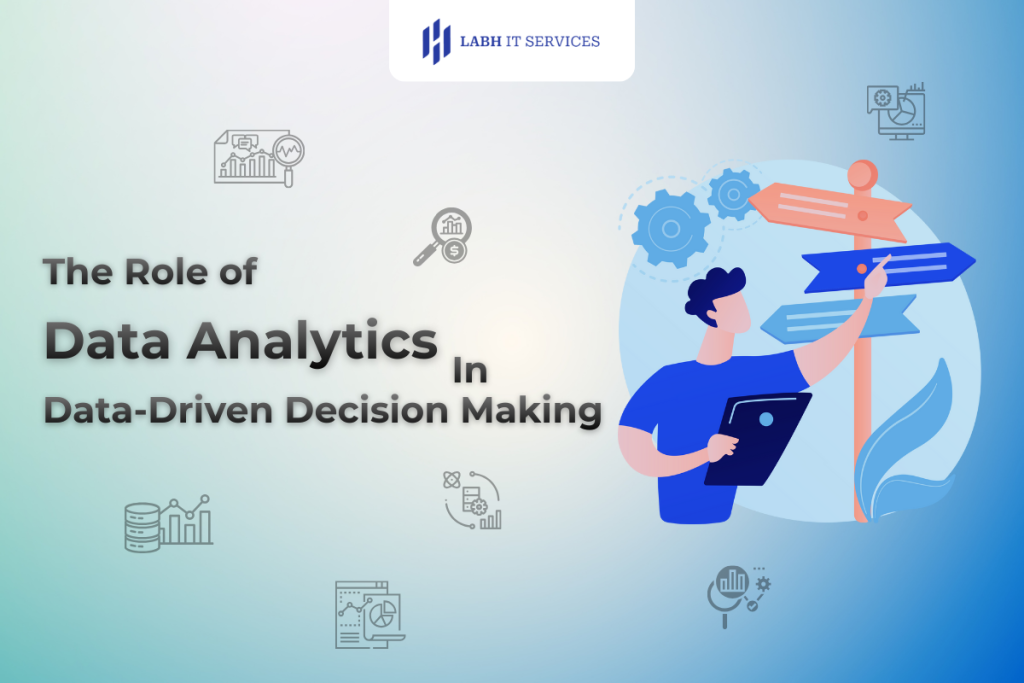
Most business decisions are made under pressure. There is limited time, incomplete information, and often more than one possible direction to choose from. In this environment, relying on instinct alone is risky. This is where data analytics becomes essential. It gives businesses a way to pause, look at what the data is actually saying, and make decisions that feel grounded rather than rushed.
At LabH IT Services, we see this shift happen often. Teams move from reactive decision-making to calmer, more deliberate choices once analytics becomes part of their routine. It’s not about replacing experience or judgment. It’s about supporting those instincts with evidence, so decisions feel clearer and easier to stand behind.
Why Decision-Making Has Changed in Modern Businesses?
Speed matters more than ever
Markets move quickly, customer behaviour changes fast, and internal priorities shift constantly. Businesses that wait too long to decide often miss opportunities.
Complexity has increased
More systems, more data sources, and more metrics mean decisions are rarely simple anymore. Without analytics, it’s hard to see the full picture.
Accountability is higher
Leaders are expected to explain why decisions were made. Data provides that justification and reduces uncertainty.
These changes have made data-driven decision-making less of an option and more of a necessity.
What Data-Driven Decision Making Really Means?
Data-driven decision-making does not mean blindly following numbers. It means using data as a guide rather than a guess.
In practice, data analytics helps businesses:
- Understand what is happening now
- Learn from what happened in the past
- Spot patterns and trends
- Compare options objectively
- Reduce bias in decision-making
When analytics is used well, it supports human judgment instead of overriding it.
How Data Analytics Supports Better Decisions?
Clearer visibility
Analytics brings information into focus. Instead of scattered reports, teams see a clear picture of performance.
Faster insight
Automated reporting reduces delays, allowing decisions to happen while they still matter.
Consistency across teams
When everyone works from the same data, alignment improves and confusion drops.
Confidence in outcomes
Decisions feel stronger when backed by evidence.
Over time, this builds trust not only in the data but in the decision-making process itself.
Different Types of Decisions Analytics Helps With
Data analytics supports decisions at every level of a business.
Strategic decisions
Long-term planning, growth strategies, and investment choices rely heavily on trends and historical data.
Operational decisions
Day-to-day adjustments become easier when performance metrics are visible.
Financial decisions
Budgets, forecasts, and cost control depend on accurate, timely data.
Customer-focused decisions
Understanding behaviour and preferences improves service and engagement.
Each of these areas benefits when decisions are informed rather than assumed.
Where Data Analytics Services Add Real Value
Analytics tools alone rarely deliver results. Value comes from how analytics is implemented and used. This is where data analytics services play an important role.
Structured data preparation
Clean, organised data ensures insights are reliable.
Relevant reporting
Dashboards focus on what matters, not everything possible.
Ongoing refinement
Analytics evolves as business needs change.
Without this structure, analytics often becomes underused or misunderstood.
How We Approach Analytics at LabH IT Services
In the middle of most analytics projects, we notice the same challenge. Businesses don’t lack data. They lack clarity. At LabH IT Services, we begin by understanding the decisions teams struggle with most. Where does uncertainty slow things down? What questions come up repeatedly?
We then design analytics around those questions. Not generic dashboards. Not unnecessary metrics. Just insights that support real decisions. This approach helps teams adopt analytics naturally, without forcing new habits overnight.
Common Mistakes in Data-Driven Decision Making
Even with analytics in place, some mistakes can limit its impact.
- Relying on too many metrics
- Using outdated or inconsistent data
- Ignoring context behind the numbers
- Treating analytics as a one-time project
- Failing to align insights with business goals
Recognising these issues early helps businesses get more value from their analytics efforts.
How Analytics Improves Collaboration and Alignment
Data-driven decisions work best when teams are aligned.
Shared understanding
Analytics creates a common language across departments.
Reduced debate
Discussions focus on actions instead of arguing over numbers.
Clear priorities
Teams understand what matters most and why.
This alignment improves not just decisions, but overall teamwork.
Why Data Analytics Is a Long-Term Capability
Analytics delivers the most value when it becomes part of everyday operations.
Continuous insight
Regular reporting keeps teams informed.
Adaptability
Analytics evolves as the business grows.
Learning culture
Teams become more curious and evidence-driven.
This long-term mindset turns analytics into a strategic advantage.
Data Analytics and Risk Reduction
Decisions made without insight often carry hidden risks.
Early warning signs
Analytics highlights issues before they escalate.
Scenario comparison
Teams can evaluate options more clearly.
Reduced reliance on assumptions
Evidence replaces guesswork.
Risk does not disappear, but it becomes easier to manage.
Turning Insight into Action
Insight alone is not enough. The real value lies in what businesses do with it.
With data analytics, organisations can:
- Act faster with confidence
- Adjust strategies based on evidence
- Improve efficiency over time
- Measure the impact of decisions
Supported by strong data analytics services, insight turns into action rather than sitting unused in reports.
Why Data-Driven Decisions Shape Future Success?
As competition increases, businesses that rely on intuition alone fall behind. Data-driven decision making creates consistency, transparency, and resilience.
Analytics helps businesses stay responsive without being reactive. It supports growth while keeping risks visible. Most importantly, it gives leaders confidence in the choices they make every day.
Building Smarter Decisions with LabH IT Services
If your business wants to move away from guesswork and toward clarity, analytics is the foundation to focus on. When implemented thoughtfully, it becomes part of how decisions are made, not an extra step.
At LabH IT Services, we help organisations use data analytics supported by reliable data analytics services to make decisions that feel informed, balanced, and confident.
Let’s start building decisions you can trust.
FAQs
What is data-driven decision-making?
It is the process of using data insights to guide business decisions instead of relying only on intuition.
How does data analytics improve decision-making?
It provides clear, timely insights that reduce uncertainty and support confident choices.
What types of businesses benefit from data analytics?
Businesses of all sizes benefit from improving visibility, efficiency, and planning.
Is data analytics only for large organisations?
No, smaller businesses also use analytics to track performance and guide growth.
How do companies start with data analytics?
They start by defining goals, organising data, and building simple, meaningful reports.