Most businesses rely on data every single day, yet many still struggle to turn that data into something usable. Reports take time to prepare. Numbers don’t always match across teams. Decisions feel slower than they should. This is where SQL Server Reporting Services quietly makes a real difference. They sit between raw databases and the people who need answers, turning stored information into clear, structured reports that actually support decisions.
At LabH IT Services, we often speak with teams who feel frustrated with their reporting process. The data exists, but accessing it feels harder than it should be. Spreadsheets circulate, manual work piles up, and confidence in the numbers starts to slip. SQL Server Reporting Services helps remove that friction. When reporting is built properly, it becomes something teams rely on, not something they work around.
Why Reporting Still Matters in a Data-Heavy World?
Data alone doesn’t guide decisions
Databases store information, but they don’t explain it. Without reporting, data stays locked away, useful only to technical teams.
Timing affects outcomes
A decision made too late can be just as damaging as a wrong one. Slow reporting often leads to missed opportunities.
Trust shapes action
When people don’t trust reports, they hesitate. Strong reporting rebuilds that trust.
These challenges are common, and they’re exactly why structured reporting remains essential.
What SQL Server Reporting Services Actually Do?
SQL Server Reporting Services is designed to turn database data into usable reports. It focuses on consistency, structure, and reliability.
With SQL Server Reporting Services, businesses can:
- Create standardised reports from SQL databases
- Automate report generation and delivery
- Present data in a clear, readable format
- Reduce dependence on manual spreadsheets
- Share consistent insights across teams
Instead of explaining the data repeatedly, reports start speaking for themselves.
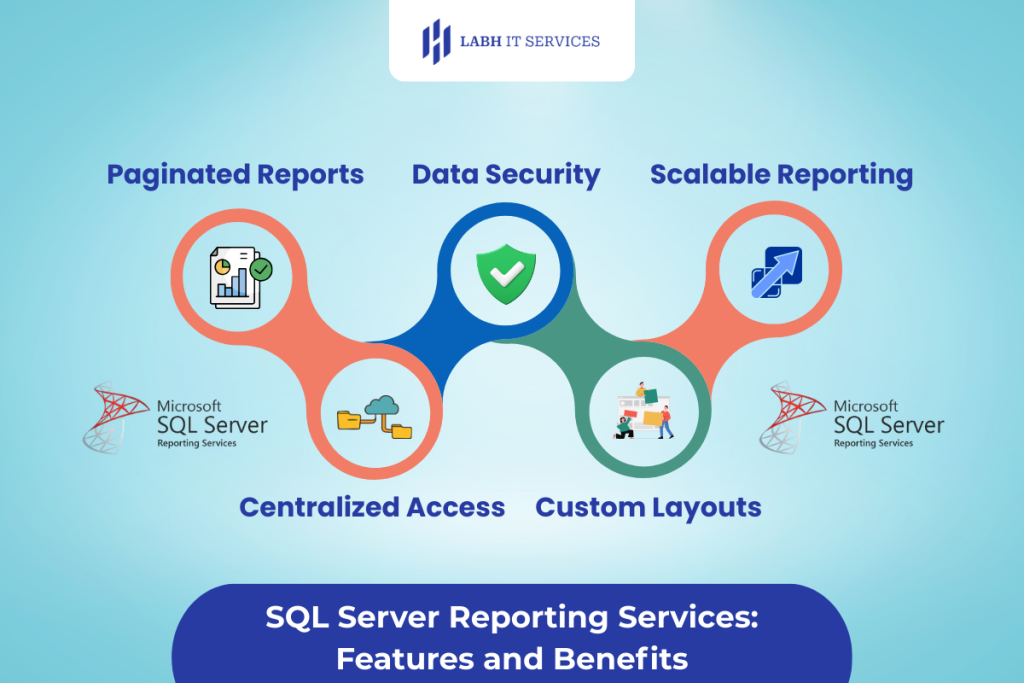
Key Features That Make SSRS Valuable
Centralised report management
Reports are created, stored, and managed in one place, making updates and maintenance easier.
Scheduled reporting
Reports can run automatically at set times, saving hours of manual effort.
Multiple output formats
Users can access reports in formats that suit their needs, without extra work.
Secure access control
Sensitive data stays protected while still reaching the right people.
These features work together to create a stable reporting environment.
How SQL Server Reporting Supports Better Decisions?
Consistent information
When everyone sees the same numbers, discussions shift from accuracy to action.
Clear performance visibility
Reports highlight trends and patterns that would otherwise remain hidden.
Historical insight
Decision-makers can review performance over time, not just isolated moments.
This clarity reduces hesitation and supports confident decision-making.
SQL Server Reporting vs Manual Reporting
Many businesses still rely heavily on spreadsheets and manual processes. Over time, those methods start causing problems.
Manual reporting challenges
- Time-consuming preparation
- Higher risk of errors
- Inconsistent data definitions
- Limited scalability
- Dependency on specific individuals
With SQL Server reporting, these issues are reduced significantly. Automation and structure replace repetition and guesswork.
Where SQL Server Reporting Fits in Modern Businesses?
SQL Server reporting works particularly well in environments where data accuracy and consistency matter.
Finance
Accurate reporting supports budgeting, forecasting, and compliance.
Operations
Performance reports highlight inefficiencies and bottlenecks.
Sales
Clear reports track targets, pipelines, and trends.
Management
Leaders gain a reliable overview without waiting for manual updates.
This wide applicability makes SQL Server reporting a practical choice across departments.
How do We Implement SQL Server Reporting at LabH IT Services?
In the middle of most reporting projects, we see the same issue. Businesses don’t want more reports. They want clearer answers. At LabH IT Services, we start by understanding how decisions are currently made. What questions come up repeatedly? Where does reporting slow things down?
We design reports that directly support those needs. No unnecessary complexity. No cluttered layouts. Just structured, purposeful reporting that teams can trust. When reporting fits naturally into daily workflows, adoption happens without resistance.
The Benefits of SQL Server Reporting for Growing Companies
As businesses grow, reporting needs become more complex. SQL Server Reporting Services scales well with that growth.
Handles larger data volumes
Reports continue to perform as databases grow.
Supports more users
Multiple teams can access reports without duplication.
Adapts to changing requirements
New metrics and views can be added over time.
This flexibility helps businesses stay in control as complexity increases.
SQL Server Reporting as a Foundation for Analytics
Before advanced analytics can deliver value, reporting must be solid.
Clean data input
Reliable reports feed analytics tools accurately.
Easier analysis
Structured data simplifies deeper insight.
Stronger outcomes
Analytics becomes actionable instead of theoretical.
Reporting and analytics work best when built together.
Common Mistakes Businesses Avoid with Structured Reporting
Without proper reporting, businesses often fall into the same traps.
These include:
- Relying on outdated spreadsheets
- Rebuilding reports repeatedly
- Using inconsistent metrics
- Delaying decisions due to uncertainty
- Overloading teams with manual tasks
Structured reporting helps avoid these issues steadily.
Why SQL Server Reporting Remains Relevant Today?
Despite newer tools entering the market, SQL Server Reporting Services continues to be widely used.
Proven stability
It delivers consistent performance over time.
Strong integration
It fits naturally into SQL-based environments.
Cost-effective reporting
Businesses gain value without unnecessary complexity.
This reliability keeps SQL Server reporting relevant for modern organisations.
Building Better Decisions with SQL Server Reporting
Reports should exist to support action, not just documentation.
With SQL Server reporting, businesses can:
- Track performance clearly
- Identify trends early
- Reduce uncertainty
- Support planning
- Make informed decisions faster
When reporting is reliable, decision-making becomes calmer and more focused.
Strengthen Your Reporting with LabH IT Services
If your business struggles with inconsistent reports, slow insights, or manual processes, it’s often a reporting issue at its core. With the right setup, reporting becomes a source of clarity rather than confusion.
At LabH IT Services, we help businesses implement SQL Server Reporting Services using proven SQL Server reporting practices that support accuracy, confidence, and growth.
Let’s help you turn reporting into a strength, not a frustration.
FAQs
What is SQL Server Reporting Services?
It is a reporting platform that creates structured reports from SQL databases for business use.
What are the main benefits of SSRS?
It improves consistency, automates reporting, and supports reliable decision-making.
How does SQL Server reporting help businesses?
It turns stored data into clear reports that teams can trust and act on.
Is SSRS suitable for growing businesses?
Yes, it scales well as data volumes and reporting needs increase.
Can SQL Server reporting reduce manual work?
Yes, automation replaces repetitive report preparation and reduces errors.