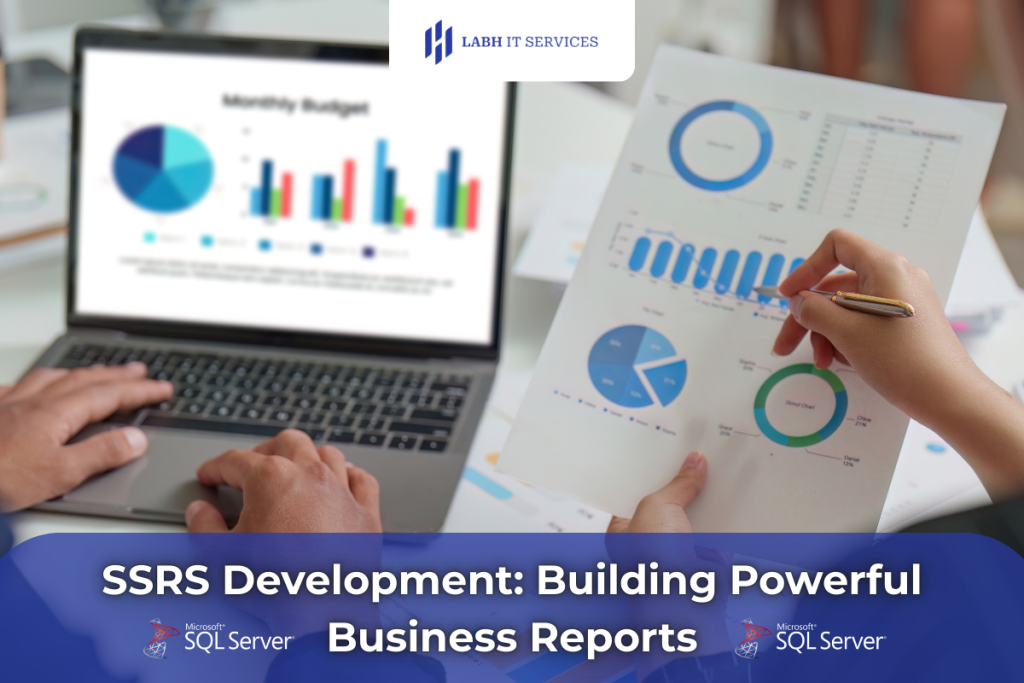
Most business users don’t think about databases. They think about answers. How are we performing? Where are we losing time? What needs attention right now? Those answers usually live inside systems, hidden in tables and queries that only technical teams see. This is where SQL Server reporting becomes meaningful for non-technical users. It translates stored data into something people across the business can actually understand and use.
At LabH IT Services, we often meet teams who rely on reports daily but don’t fully trust them. Numbers arrive late. Different versions circulate. People export data into spreadsheets just to feel sure. That friction isn’t about effort, it’s about structure. When reporting is designed properly, business users stop worrying about the data itself and start focusing on what it tells them. That shift alone changes how confidently decisions get made.
Why Business Users Need Clear Reporting
Business roles depend on information constantly. Without accessible reporting, even simple questions take too long to answer.
- Sales teams need visibility into performance and targets
- Operations teams track workflow efficiency
- Finance teams monitor costs and forecasts
- Leadership reviews trends and risks
When reports are unclear or inconsistent, people hesitate. Decisions slow down, not because teams lack skill, but because they lack certainty. Good reporting removes that hesitation.
What SQL Server Reporting Means For Non-Technical Teams
SQL Server reporting often sounds technical, but its purpose is straightforward: turn database information into readable insights.
With SQL Server reporting, business users can:
- View structured reports without querying databases
- Access consistent metrics across departments
- Track performance over time
- Identify trends quickly
- Reduce reliance on manual data preparation
The technology sits behind the scenes. What users experience is clarity.
How Structured Reporting Improves Daily Work
When reporting works properly, it quietly changes how people operate.
Faster Answers
Users find information directly instead of requesting it.
Shared Understanding
Teams discuss the same numbers, not different interpretations.
Reduced Manual Work
Less exporting, merging, and rechecking data.
These changes may seem small individually, but together they remove friction from everyday work.
Why Reporting Consistency Matters So Much
Business users rely on trust. If a report changes unexpectedly, confidence drops instantly.
Consistent reporting ensures:
- Metrics mean the same thing everywhere
- Numbers remain stable across reports
- Historical comparisons stay reliable
Without consistency, even accurate data becomes questionable. With it, reporting becomes dependable.
How Reporting Connects Data To Decisions
Data stored in databases doesn’t help until it reaches decision-makers in a usable form.
Reporting creates that connection by:
- Presenting information in context
- Highlighting relevant metrics
- Showing changes over time
- Making patterns visible
For business users, this turns abstract data into a practical understanding.
How We Approach SQL Server Reporting At LabH IT Services
In many projects, we see the same challenge. Reports exist, but they don’t fully match how teams think. Business users need answers framed in familiar terms, not technical structures. At LabH IT Services, we start by understanding how people actually use reports. What questions come up repeatedly? Where does confusion appear?
We then design reporting views that align with those real workflows. Not overloaded dashboards. Not an unnecessary detail. Just clear reporting that feels natural to use. When reports match how people work, adoption follows automatically.
Common Reporting Frustrations Business Users Face
Without structured reporting, users often encounter:
- Multiple report versions
- Delayed updates
- Manual spreadsheet work
- Conflicting metrics
- Limited visibility
These frustrations rarely stem from a lack of data. They come from how data is presented. Reporting design fixes that gap.
Why SQL Server Reporting Remains Relevant
Even with new BI tools, SQL-based reporting continues to support many organisations effectively.
- It connects directly to existing databases
- It supports structured, repeatable reports
- It scales with growing data volumes
- It integrates with broader systems
This stability makes it practical for businesses that rely on consistent reporting.
The Role Of Infrastructure In Reliable Reporting
Behind every dependable report sits stable infrastructure. Systems must store and process data securely and efficiently. This is where data centre service providers support the broader reporting environment.
Reliable infrastructure ensures:
- Data availability
- Performance stability
- Secure storage
- Continuous access
Business users rarely see this layer, but they depend on it daily.
How Reporting Supports Cross-Team Alignment
Reporting does more than inform individuals. It aligns teams.
When reports are shared:
- Sales and finance see matching performance metrics
- Operations and leadership review the same trends
- Planning discussions rely on common data
Alignment reduces conflict and speeds decisions.
Turning Reports Into Business Insight
Reports should not exist just to document activity. Their purpose is to guide action.
With SQL Server reporting, business users can:
- Spot issues earlier
- Monitor progress clearly
- Compare performance over time
- Support planning discussions
Insight appears when reporting is structured and accessible.
Reporting Confidence Changes Behaviour
When users trust reports, behaviour shifts naturally.
- Decisions happen faster
- Discussions focus on strategy
- Teams rely less on instinct
- Planning feels more grounded
Confidence in reporting often matters as much as the data itself.
How Modern Infrastructure Strengthens Reporting
Reliable reporting depends on stable environments. Data centre service providers contribute by ensuring systems run consistently and securely.
Strong infrastructure supports:
- Continuous report availability
- Faster data retrieval
- Secure access control
- Reduced downtime
For business users, this translates into dependable daily access to information.
Making Reporting Accessible For All Business Users
Reporting should not feel technical or exclusive. Good design ensures anyone can interpret insights easily.
Accessible reporting includes:
- Clear labels and definitions
- Logical structure
- Relevant metrics
- Consistent layout
When reports feel intuitive, adoption increases naturally.
Helping Your Teams Work With Confidence
If business users struggle to trust or access reports, the issue often lies in the reporting structure rather than effort. Clear reporting removes hesitation and supports better decisions. At LabH IT Services, we help organisations strengthen SQL server reporting environments supported by reliable data centre service providers, so teams spend less time verifying data and more time using it.
Let’s make reporting simpler and more dependable for your teams.
FAQs
What Is SQL Server Reporting?
It is the process of turning database data into structured, readable reports for business users.
Why Is Reporting Important For Business Users?
It provides clear insights that support daily decisions and performance tracking.
How Does SQL Server Reporting Improve Work Efficiency?
It reduces manual data preparation and delivers consistent information quickly.
What Role Do Data Centres Play In Reporting?
They ensure data storage, processing, and access remain stable and secure.
Can Non-Technical Users Use SQL Server Reports?
Yes, reports are designed to be readable and accessible without technical skills.