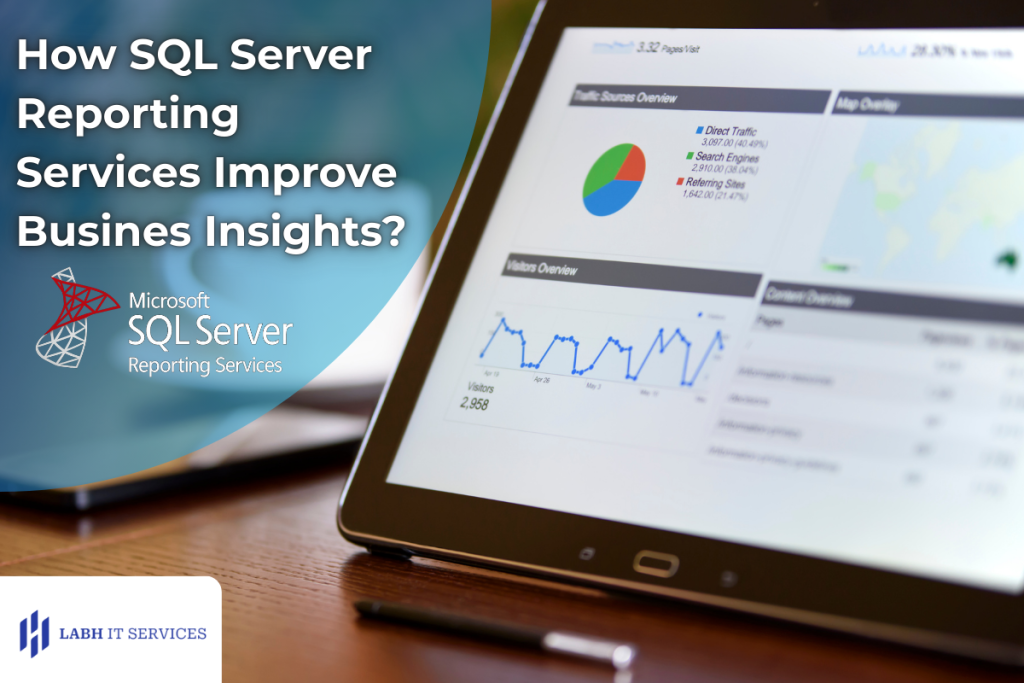
Businesses today don’t struggle because they lack data. They struggle because they can’t always make sense of it. Numbers exist everywhere: in databases, spreadsheets, and systems; but turning those numbers into something meaningful is where the real challenge lies. This is exactly where sql server reporting services start to prove their value. They help businesses move from raw data to clear, usable insight without adding unnecessary complexity.
At LabH IT Services, we often work with teams that already have strong databases but still feel unsure about their reporting. Reports take too long, different teams rely on different numbers, and decision-making becomes cautious. Over time, that uncertainty affects confidence and performance. When reporting is structured properly, those doubts fade. Teams stop questioning the data and start using it.
Why Business Insights Matter More Than Ever?
Data alone doesn’t drive decisions
Having access to data is not the same as understanding it. Without proper reporting, information stays locked inside systems, inaccessible to the people who need it most.
Insights shape strategy
Clear insights help businesses spot trends, identify risks, and understand performance. Without them, decisions rely too much on instinct.
Poor reporting slows progress
When reports are delayed or inconsistent, opportunities are missed. Teams react late instead of acting early.
These problems don’t always appear dramatic, but they quietly limit growth.
What SQL Server Reporting Services Actually Do?
At a basic level, reporting services help businesses present database information in a structured way. But their real strength lies in how they make data usable across the organisation.
With sql server reporting services, businesses can:
- Create structured, repeatable reports
- Pull data directly from databases
- Present information in a clear, readable format
- Reduce reliance on manual reporting
- Share consistent insights across teams
Instead of working with scattered data, everyone works from the same source of truth.
How Reporting Improves Business Understanding?
Reports turn data into context
Numbers on their own don’t tell a story. Reporting adds context by grouping, filtering, and presenting data in ways people can understand.
Trends become visible
Patterns that stay hidden in raw tables become obvious once data is reported properly.
Decisions become more confident
When teams trust the data in front of them, they spend less time questioning and more time acting.
This shift alone can change how a business operates day to day.
Why SQL-Based Reporting Fits Many Businesses?
SQL-based systems are already central to how many organisations store information. Reporting built on top of that structure feels familiar and reliable.
Centralised data access
Reports pull directly from databases, reducing duplication and inconsistency.
Reliable performance
When designed properly, reporting runs efficiently without slowing core systems.
Flexible reporting formats
Different teams can view the same data in different ways, depending on their needs.
This flexibility makes sql server reporting a practical option for businesses that want clarity without disruption.
Common Business Challenges Reporting Helps Solve
When reporting is weak, businesses tend to face the same issues repeatedly. Structured reporting helps resolve many of them.
Here are a few examples:
- Conflicting numbers across departments
- Slow reporting cycles
- Heavy reliance on spreadsheets
- Manual data preparation
- Limited visibility into performance
- Difficulty tracking trends over time
Once reporting becomes reliable, these problems gradually disappear.
How LabH IT Services Approaches Reporting Projects?
In the middle of most reporting projects, we focus on one simple question: what does the business actually need to see? At LabH IT Services, we don’t believe in building reports for the sake of it. We work closely with teams to understand what information supports real decisions.
We review existing databases, reporting processes, and performance goals. From there, we design reporting structures that are clear, consistent, and easy to maintain. The aim is not to overwhelm users with data, but to give them insight they can act on with confidence.
Improving Report Performance and Reliability
Good reporting is not just about appearance. Performance matters just as much.
Efficient queries
Reports should retrieve only the data they need, keeping performance stable.
Optimised views
Well-designed database views improve speed and reliability.
Scheduled reporting
Automated report schedules reduce manual effort and errors.
Clear report structure
Simple layouts load faster and are easier to interpret.
These practices help ensure reporting supports insight rather than becoming a bottleneck.
How Reporting Supports Different Teams?
Structured reporting benefits more than just leadership.
Management
Gain a clear overview of performance without waiting for manual updates.
Finance
Track revenue, costs, and trends with confidence.
Operations
Identify inefficiencies and bottlenecks early.
Sales
Monitor performance, targets, and customer activity.
IT teams
Reduce ad-hoc report requests and manual workloads.
When everyone sees the same information, collaboration improves naturally.
Why Reporting Accuracy Is Critical?
Incorrect or inconsistent reports damage trust. Once teams stop trusting reports, they stop using them. That is why accuracy is non-negotiable.
Consistent data sources
Using a single source of truth reduces confusion.
Clear definitions
Metrics should mean the same thing across departments.
Reduced human error
Automated reporting limits mistakes caused by manual handling.
Accurate reporting builds confidence, and confidence drives better decisions.
Turning Reporting into Business Insight
Insight doesn’t come from having more reports. It comes from having the right ones. Businesses that succeed with reporting focus on relevance, not volume.
With sql server reporting, teams can:
- Focus on key performance indicators
- Track progress over time
- Identify issues early
- Support long-term planning
Reporting becomes a tool for understanding, not just documentation.
Long-Term Value of Structured Reporting
Strong reporting systems grow with the business.
Scalability
Reports adapt as data volumes increase.
Stability
Consistent reporting reduces disruption.
Better planning
Historical data supports forecasting and strategy.
Reduced risk
Early insight helps avoid costly mistakes.
Over time, these benefits compound.
Move Forward with LabH IT Services
If your business wants clearer insight, stronger reporting, and more confidence in its decisions, structured reporting is a powerful place to start. With the right setup, reports stop being a task and start becoming a resource.
At LabH IT Services, we help businesses use sql server reporting services to turn data into insight that actually supports daily decisions. By building reporting that fits how your teams work, we help you move from data overload to real understanding.
Contact us to get started.
FAQs
What do SQL Server Reporting Services do?
They help create structured reports that turn database data into readable, actionable insights.
How can you improve the performance of a SQL Server database?
By optimising queries, indexing data properly, and using efficient reporting views.
Why is reporting so important and what are some ways it is achieved?
Reporting provides visibility into performance and is achieved through automated, structured reports.
What are the benefits of SSRS?
It improves reporting consistency, reduces manual work, and supports better decision-making.
How to improve view performance in SQL Server?
By simplifying view logic, indexing correctly, and limiting unnecessary data retrieval.