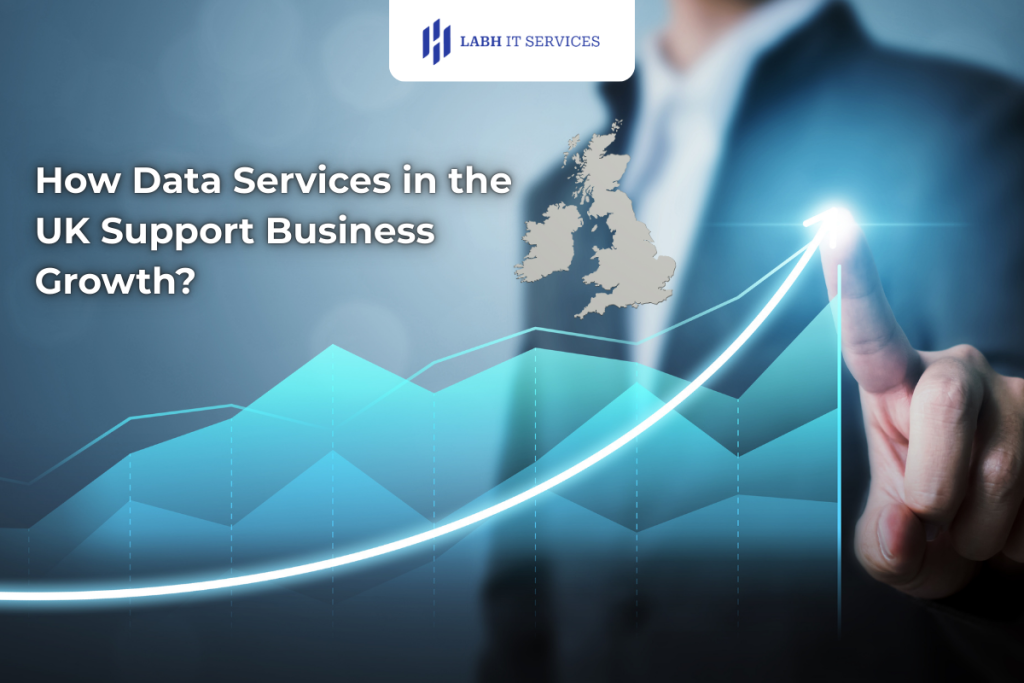
Most businesses today are sitting on more data than they realise. Sales numbers, customer activity, operational details, and financial records. It’s all there. The challenge is not collecting it anymore. The real challenge is knowing how to use it properly. This is where data services UK start to make a real difference. They help businesses turn scattered information into something structured, reliable, and genuinely useful.
At LabH IT Services, we often work with teams who feel that growth has made things more complicated, not clearer. Data lives in too many places. Reports take too long. Decisions feel slower than they used to. That’s not a people problem. It’s usually a data problem. When data services are set up correctly, they quietly remove friction and give businesses the clarity they need to grow with confidence.
Why Growing Businesses Need Better Data Support?
Growth increases complexity
As businesses expand, systems multiply. New tools are added, new processes appear, and data starts spreading across platforms. What once felt manageable suddenly feels messy.
Decisions carry more risk
With growth comes higher stakes. Guesswork becomes expensive. Businesses need data they can trust, not numbers that need constant validation.
Manual processes stop scaling
Spreadsheets and manual reports may work early on, but they quickly become a bottleneck as volumes increase.
These are often the early signs that better data support is needed.
What Data Services Actually Cover?
Data services are not a single solution. They cover a range of activities that support how data flows through a business.
In practical terms, data services UK often include:
- Collecting data from different systems
- Cleaning and validating information
- Storing data in structured environments
- Making data accessible for reporting and analysis
- Maintaining consistency and security
When these foundations are in place, everything built on top becomes easier to manage.
How Data Analytics Supports Business Growth?
Data on its own does very little. Insight is what drives action. This is where data analytics business capabilities come into play.
Turning numbers into insight
Analytics helps businesses understand patterns, trends, and performance instead of just looking at raw figures.
Supporting faster decisions
When insights are available quickly, teams respond faster and with more confidence.
Measuring what matters
Analytics keeps focus on key performance indicators rather than vanity metrics.
Over time, this clarity shapes smarter strategies and steadier growth.
Why the UK Market Relies on Strong Data Services?
Businesses across the UK face increasing pressure to operate efficiently, stay compliant, and respond quickly to change.
Regulatory expectations
Clear data handling and reporting help businesses meet compliance requirements without added stress.
Competitive environments
Companies that understand their data move faster than those that don’t.
Digital transformation
As more systems move online, data services help keep everything connected and consistent.
This is why investment in data services UK continues to grow across industries.
How Data Services Improve Everyday Operations?
Good data support is felt most in daily work, not just long-term strategy.
Fewer reporting delays
Automated pipelines replace manual preparation.
Reduced errors
Clean data reduces mistakes that cost time and trust.
Better collaboration
Teams work from the same information instead of competing versions.
Clear accountability
When data is visible, ownership becomes clearer.
These improvements might seem small individually, but together they change how smoothly a business runs.
Where LabH IT Services Adds Value?
In the middle of many projects, we see the same pattern. Businesses don’t want more tools. They want fewer doubts. At LabH IT Services, we begin by understanding how data currently moves through the organisation. Where does it come from? Where does it slow down? Where does it lose reliability?
From there, we design practical data services that fit real workflows. We avoid overcomplication and focus on stability and clarity. When data becomes dependable, teams stop questioning it and start using it properly. That’s when growth feels less chaotic and more controlled.
The Role of Data Analytics in Long-Term Growth
Analytics is not just about looking backwards. It supports planning for what comes next.
Better forecasting
Historical data helps businesses plan with fewer surprises.
Smarter resource use
Time, budget, and effort go where they matter most.
Stronger customer understanding
Analytics highlights behaviour patterns that guide better engagement.
A strong data analytics business approach turns insight into a competitive advantage.
Common Growth Challenges Data Services Help Solve
Without proper data support, businesses often struggle with:
- Conflicting reports across departments
- Slow decision-making
- Poor visibility into performance
- Difficulty scaling systems
- Increased operational risk
Data services don’t remove challenges overnight, but they give businesses a framework to manage them steadily.
Why Data Services Support Scalability?
Growth puts pressure on systems. Data services help businesses prepare before those pressures cause disruption.
Flexible infrastructure
Systems adapt as volumes increase.
Easier onboarding of new tools
New platforms integrate more smoothly.
Long-term reliability
Data remains usable as the business evolves.
This scalability is essential for sustained growth.
Data Services and Risk Reduction
Poor data quality introduces risk into almost every decision. Reliable data services reduce that risk.
Consistent definitions
Everyone works from the same understanding.
Automated validation
Errors are caught early.
Secure access
Sensitive information stays protected without blocking collaboration.
Confidence grows when data feels stable and trustworthy.
Turning Data into a Growth Asset
Data becomes valuable only when it supports action. Strong data services ensure information reaches the right people at the right time.
With data analytics business capabilities supported by solid foundations, businesses can:
- Respond faster to change
- Improve operational efficiency
- Strengthen planning
- Support confident leadership decisions
Growth becomes more intentional and less reactive.
Supporting Sustainable Growth with the Right Foundations
Quick fixes rarely last. Sustainable growth needs stable systems underneath it.
Clear structure
Data remains organised even as complexity increases.
Continuous improvement
Insights evolve as the business changes.
Better alignment
Teams stay focused on shared goals.
Data services provide long-term stability.
Building Confidence Through Better Data
One of the biggest shifts businesses notice after improving data services is confidence. Meetings change. Decisions speed up. Conversations move from questioning numbers to discussing next steps.
That confidence is not accidental. It comes from knowing the data can be trusted.
Taking the Next Step with LabH IT Services
If your business is growing but feels held back by unclear data, it may be time to strengthen your foundations. With the right approach, data stops being a challenge and starts supporting progress. At LabH IT Services, we help businesses use data services UK and practical data analytics business solutions to bring clarity, stability, and momentum into everyday decision-making.
Let’s start building a data foundation that supports where your business is headed.
FAQs
What are data services, and why are they important for businesses?
They help organise, manage, and use data reliably to support better decisions and growth.
How do data services support business growth?
They improve visibility, reduce errors, and enable faster, more confident decision-making.
What is the role of data analytics in business growth?
Analytics turns data into insight that guides strategy and performance improvement.
Are data services useful for small and growing businesses?
Yes, they help smaller teams scale operations without losing control of information.
How do businesses start improving their data services?
They begin by assessing current data flows, improving structure, and focusing on clarity.