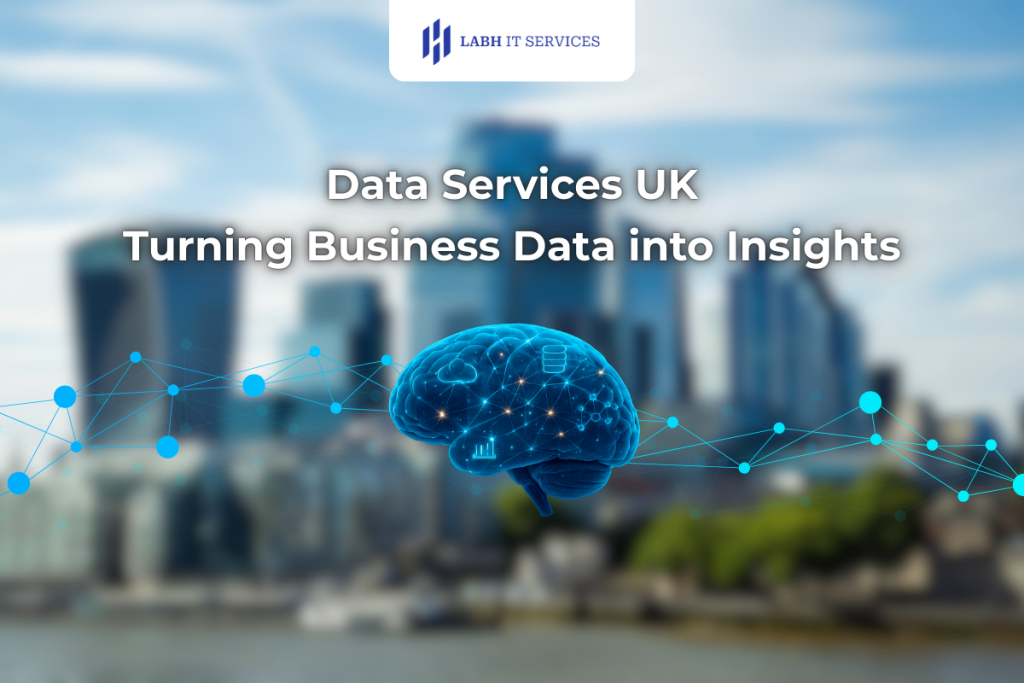
Most businesses in the UK sit on more data than they realise. Sales numbers, customer records, operational metrics, and financial reports; it all keeps piling up. Yet when it’s time to make decisions, teams still hesitate. The data exists, but the insight doesn’t always show up when it’s needed. That gap is exactly why data services UK have become so important for modern businesses.
At LabH IT Services, we regularly speak with organisations that feel this frustration. They know their data should be helping them move faster and think clearly, but instead, it feels scattered and hard to trust. Reports take time. Numbers don’t always match. Teams spend more effort preparing data than actually using it. Strong data services change that experience by bringing structure, consistency, and confidence back into the way businesses work with information.
Why Business Data Often Fails to Deliver Value?
Data grows quietly over time
Data doesn’t arrive in one big wave. It builds up gradually as businesses adopt new tools and systems. Over time, information spreads across platforms, and no single view tells the full story.
Manual work creates delays
When teams rely on spreadsheets and manual processes, reporting slows down. By the time insights are ready, the moment to act has often passed.
Conflicting numbers erode trust
If different departments report different figures, confidence drops quickly. Decisions stall because no one is sure which numbers are right.
These challenges don’t always look urgent, but they quietly hold businesses back.
What Data Services Actually Mean for Businesses?
Data services are not just about storage or tools. They focus on how data moves, how it’s prepared, and how it’s used.
With data services UK, businesses typically gain:
- Centralised access to information
- Cleaner, more consistent data
- Faster reporting cycles
- Reduced reliance on manual processes
- Better support for analytics and decision-making
The goal isn’t to drown teams in more dashboards. It’s to make data easier to work with every day.
How Data Services Turn Raw Information into Insight?
Cleaning and preparation
Raw data often contains gaps, duplicates, or errors. Data services address these issues before information reaches reports.
Integration across systems
Sales, finance, operations, and marketing data come together in one environment, creating a shared view.
Consistent definitions
Metrics mean the same thing across teams, reducing confusion.
Reliable delivery
Automated pipelines ensure data arrives on time, every time.
When these foundations are in place, insight starts to flow naturally.
The Role of IT Consulting Services in Data Strategy
Data initiatives work best when they align with broader business goals. This is where IT consulting services play a crucial role.
Aligning data with decisions
Consulting helps identify which insights actually matter for the business.
Designing sustainable systems
Rather than quick fixes, consulting focuses on long-term stability.
Reducing complexity
Good consulting simplifies data landscapes instead of adding layers.
Without this guidance, data projects often become overcomplicated and underused.
How We Approach Data Services at LabH IT Services?
In the middle of most data projects, we notice the same thing. Businesses don’t want more data. They want fewer doubts. At LabH IT Services, we start by understanding how teams currently use information. Where do delays happen? Where does confusion creep in? What decisions feel hardest to make?
From there, we design data services that fit real workflows. We focus on clarity over complexity and usefulness over volume. When data feels reliable, teams stop questioning it and start acting on it. That shift is where real value appears.
Practical Benefits Businesses Experience
Once strong data services are in place, the impact shows up across the organisation.
Some common benefits include:
- Faster access to information
- More consistent reporting
- Improved collaboration between teams
- Reduced manual effort
- Better visibility into performance
- Stronger confidence in decisions
Each improvement builds on the next, creating a more responsive business.
Why Data Services Matter More in the UK Market?
UK businesses operate in a highly competitive and regulated environment. Data accuracy and accessibility matter more than ever.
Growing regulatory expectations
Clear data handling and reporting reduce risk and improve compliance.
Increased competition
Businesses that use data well respond faster to market changes.
Distributed teams
Remote and hybrid work increases the need for shared, reliable data.
These factors make data services UK a strategic priority rather than a technical nice-to-have.
How Data Services Support Better Decision-Making?
Decisions improve when information is timely and trustworthy.
Less time validating data
Teams spend less effort double-checking numbers.
Clearer priorities
Insights highlight what truly needs attention.
More confident action
When data feels reliable, decisions move forward without hesitation.
This confidence changes how leaders and teams operate day to day.
Common Mistakes Businesses Avoid with Proper Data Services
Without structure, businesses often fall into the same traps.
These include:
- Overreliance on spreadsheets
- Duplicate data across systems
- Unclear ownership of reports
- Delayed insights
- Decisions driven by instinct instead of evidence
Strong data services help businesses step away from these patterns.
Data Services and Long-Term Business Growth
Growth puts pressure on data systems. What worked for a small team often breaks at scale.
Scalable infrastructure
Data services grow alongside the business.
Easier onboarding of new tools
New platforms integrate more smoothly.
Better historical insight
Past data remains accessible and meaningful.
With the right foundations, growth feels controlled rather than chaotic.
Why Data Services and Consulting Go Hand in Hand?
Technology alone doesn’t solve data challenges. Strategy matters just as much.
This is why IT consulting services continue to play an important role alongside data services.
Clear direction
Consulting keeps data initiatives focused on outcomes.
Strong governance
Access, quality, and usage remain controlled.
Future readiness
Systems adapt as business needs change.
Together, they create data environments that support long-term success.
Turning Business Data into a Competitive Advantage
Data becomes valuable only when it leads to action.
With data services UK, businesses can:
- Respond faster to change
- Improve efficiency
- Strengthen reporting and analytics
- Support smarter planning
When data flows smoothly, insight becomes part of everyday decision-making instead of an occasional exercise.
Take the Next Step with LabH IT Services
If your business is sitting on data but struggling to turn it into insight, it may be time to rethink how that data is managed. With the right approach, data becomes a support system rather than a source of confusion.
At LabH IT Services, we combine reliable data services UK with thoughtful IT consulting services to help businesses build clarity, confidence, and momentum from their information.
Let’s explore how your data can start working harder for you.
FAQs
What are data services, and why are they important?
They help organise, manage, and prepare data so businesses can use it confidently for decisions.
How do data services improve business decision-making?
They provide timely, accurate insights that reduce guesswork and hesitation.
Are data services useful for small and mid-sized businesses?
Yes, they help growing businesses manage data without relying on manual processes.
What role does IT consulting play in data services?
Consulting aligns data systems with business goals and ensures long-term sustainability.
How do businesses get started with data services?
They begin by assessing current data, defining goals, and building reliable foundations.