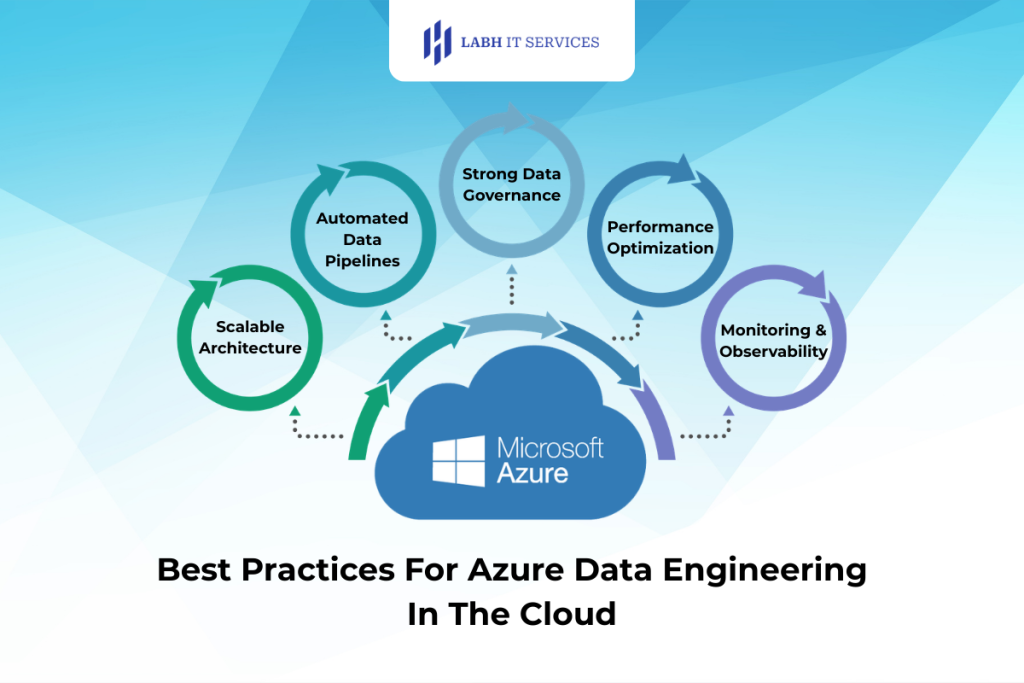
Data has become central to how modern businesses operate, but working with data in the cloud brings its own set of challenges. It’s not just about moving information from one place to another. It’s about building systems that stay reliable, flexible, and easy to manage as the business grows. This is where Azure Data Engineering plays a critical role, especially for organizations that rely on cloud platforms to support daily decisions.
At LabH IT Services, we often work with businesses that have already moved to the cloud but still feel something isn’t quite right. Data pipelines break more often than they should. Reports feel slow. Teams don’t fully trust the numbers they see. These issues rarely come from the cloud itself. They usually come from how data engineering has been set up. Following the right practices makes the difference between data that works quietly in the background and data that constantly needs fixing.
Why Azure Data Engineering Needs A Thoughtful Approach
Cloud platforms make it easier to store and process large volumes of data, but that ease can also create problems if there’s no clear structure.
Many businesses start quickly, connecting systems and building pipelines without a long-term plan. At first, everything seems fine. Over time, complexity increases, costs rise, and reliability drops. Data engineering in the cloud works best when it’s designed with purpose from the beginning, even if the setup starts small.
A thoughtful approach helps businesses avoid rework later and keeps data systems aligned with real business needs.
Designing Clear And Reliable Data Pipelines
Strong pipelines sit at the heart of any data engineering setup. They control how data moves, transforms, and becomes usable.
Some key practices we always focus on include:
- Keeping pipelines simple and modular
- Clearly defining where data comes from and where it goes
- Handling errors gracefully instead of letting pipelines fail silently
- Monitoring performance consistently
Simple pipelines are easier to maintain and easier to scale. Complexity should be added only when it genuinely adds value.
Prioritizing Data Quality From Day One
Data quality issues rarely announce themselves clearly. They often show up as small inconsistencies that slowly erode trust.
In Azure Data Engineering, building quality checks early helps prevent these problems. Validation rules, consistency checks, and basic monitoring ensure data stays reliable as volumes grow.
What Strong Data Quality Practices Include
- Validating data before it enters core systems
- Standardising formats and definitions
- Tracking changes in data structure over time
- Logging issues instead of hiding them
When teams trust the data, they use it more confidently.
Using Cloud Resources Efficiently
One of the biggest advantages of Azure is flexibility, but flexibility without control can lead to wasted spend.
Best practices focus on balancing performance and cost. This means scaling resources when needed, but also scaling them down when demand drops. It also means choosing the right tools for each workload instead of defaulting to the most powerful option.
Cost awareness should be part of data engineering conversations from the start, not an afterthought.
Building For Scalability Without Overengineering
Scalability is often misunderstood. It doesn’t mean building the most complex system possible. It means building something that can grow when needed.
In Azure, scalability comes from designing flexible architectures, not from adding unnecessary layers. Pipelines should scale smoothly as data volumes increase, without requiring major redesigns.
The goal is to support growth without creating systems that are difficult to understand or maintain.
How LabH IT Services Approaches Azure Data Engineering
In the middle of most projects, we see the same pattern. Businesses don’t need more tools. They need a better structure. At LabH IT Services, we start by understanding how data is currently flowing through the organization. Where does it slow down? Where does it break? Where does it lose meaning?
From there, we design Azure-based solutions that fit how teams actually work. We focus on clarity, stability, and long-term usability. When data engineering feels calm and predictable, teams can focus on insights instead of infrastructure.
Ensuring Security And Governance In The Cloud
Cloud data systems must balance accessibility and control. Without proper governance, data becomes risky.
Good practices include clear access rules, role-based permissions, and regular audits. Security shouldn’t block productivity, but it should protect sensitive information consistently.
Azure provides strong tools for governance, but they only work when used intentionally.
Supporting Integration Across Systems
Modern businesses rarely rely on one system. Data comes from many tools, platforms, and applications.
Effective Azure Data Engineering accounts for this reality. Integration should feel smooth, not forced. Data pipelines should handle changes in source systems without constant rework.
Flexible integration reduces downtime and keeps insights flowing even as tools evolve.
Why Cloud Data Engineering Matters In The UK Market
Many organisations rely on data services UK providers as they modernise their cloud environments. Regulatory expectations, data volumes, and competitive pressure all push businesses to handle data more carefully.
Cloud-based engineering allows businesses to stay compliant while remaining flexible. It supports innovation without sacrificing control.
Common Mistakes To Avoid In Azure Data Engineering
Some challenges appear again and again:
- Building pipelines without documentation
- Ignoring monitoring until something breaks
- Overcomplicating early designs
- Treating cost as a secondary concern
- Separating data engineering from analytics needs
Avoiding these mistakes saves time, cost, and frustration in the long run.
Turning Azure Data Engineering Into A Long-Term Asset
When built well, data engineering becomes something teams barely notice. It just works.
Reliable pipelines, clean data, and scalable systems support better decisions every day. Over time, these foundations allow businesses to respond faster, plan more confidently, and grow with less disruption.
That’s the real value of doing data engineering properly in the cloud.
Moving Your Cloud Data Strategy Forward
Cloud data engineering works best when treated as an ongoing capability, not a one-off project. With the right practices, Azure becomes a stable foundation rather than a source of complexity.
At LabH IT Services, we help businesses implement Azure Data Engineering solutions supported by reliable data services UK, focusing on clarity, scalability, and long-term value.
Let’s shape a cloud data setup that grows with your business.
FAQs
What Is Azure Data Engineering?
It involves building and managing data pipelines on Azure to collect, process, and prepare data for analytics and reporting.
Why Is Azure Popular For Data Engineering?
Azure offers scalability, flexibility, and strong integration with cloud-based tools and services.
How Does Cloud Data Engineering Help Businesses?
It improves data reliability, supports faster insights, and scales with business growth.
Is Azure Data Engineering Suitable For Small Businesses?
Yes, it allows smaller teams to start simple and scale as data needs grow.
When Should A Business Invest In Data Engineering?
When data becomes difficult to manage, trust, or use effectively for decisions.