Most modern businesses are not short on data. What they struggle with is flow. Data sits in different systems, arrives at different speeds, and often feels disconnected from the decisions people need to make every day. This is where Azure Data Engineering becomes relevant. It is not about collecting more information. It is about creating a reliable structure so that data moves smoothly and stays usable.
At LabH IT Services, we regularly speak with teams who feel stuck between raw data and meaningful insight. Reports take too long. Systems don’t always connect properly. People spend more time checking numbers than acting on them. Azure-based data engineering helps change that experience. It gives businesses a framework where data is organised, scalable, and ready to support real work, not just sit in storage.
Why Data Engineering Has Become a Business Priority?
Data volumes keep increasing
Every system generates data now. Sales platforms, customer tools, operational software, and internal applications all contribute. Without proper engineering, this volume quickly becomes difficult to manage.
Speed matters more than ever
Decisions can’t wait days for reports. Businesses need near real-time visibility to stay competitive.
Growth exposes weak foundations
What works for a small setup often breaks as the business grows. Manual processes and patchwork solutions don’t scale well.
These pressures explain why data engineering is no longer a background task.
What Azure Data Engineering Really Means?
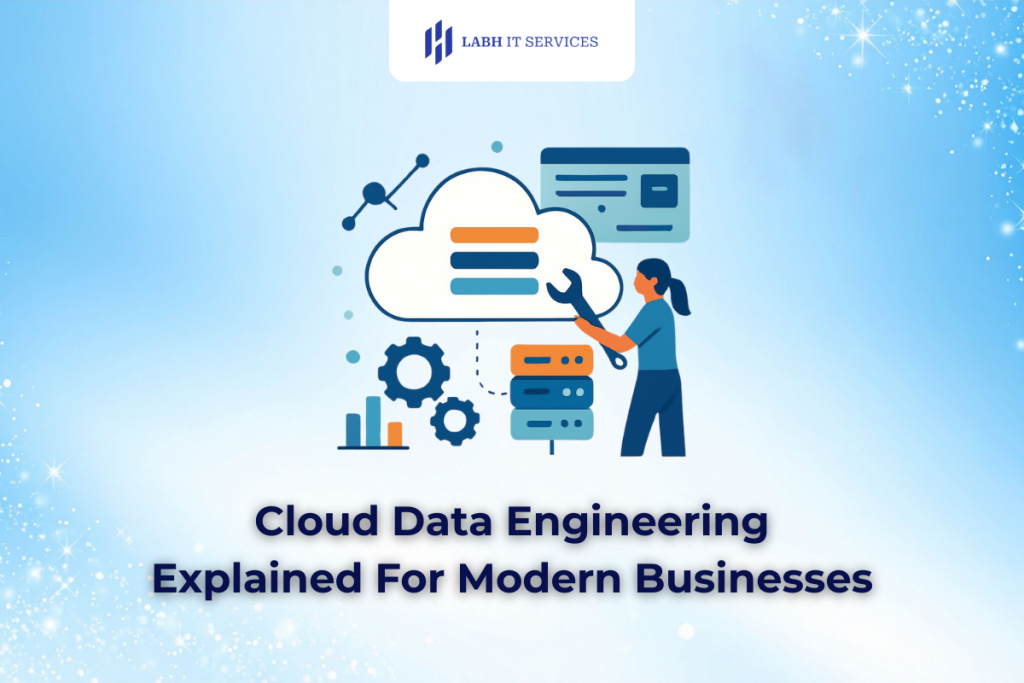
Azure data engineering focuses on how data is collected, moved, processed, and stored within Microsoft’s cloud ecosystem. But the real value is not the platform itself. It’s how the pieces are designed to work together.
With Azure Data Engineering, businesses typically:
- Ingest data from multiple sources
- Transform raw data into structured formats
- Store data securely and efficiently
- Support analytics and reporting tools
- Scale without constant redesign
When done properly, teams don’t think about the pipelines. They simply trust the output.
How Azure Supports Modern Data Workflows?
Built for scalability
Azure allows businesses to scale storage and processing as data grows, without rebuilding everything from scratch.
Flexible integration
Data from on-premise systems, cloud applications, and third-party tools can flow into one environment.
Reliability and security
Azure provides enterprise-grade security and governance, which matters as data becomes more sensitive.
Support for analytics
Azure environments integrate smoothly with analytics, reporting, and automation tools.
These features make Azure a strong choice for businesses dealing with growing data complexity.
The Difference Between Cloud Data Engineering and Traditional Setups
Traditional data systems were often rigid. They required heavy infrastructure and constant maintenance. Cloud-based approaches change that dynamic.
| Aspect | Traditional Data Engineering | Cloud Data Engineering |
| Infrastructure | Relies on on-premise servers and physical hardware | Runs on cloud platforms without physical infrastructure |
| Scalability | Difficult and time-consuming to scale | Scales easily as data volumes grow |
| Setup time | Long setup and configuration cycles | Faster deployment and quicker implementation |
| Cost structure | High upfront investment and maintenance costs | Pay-as-you-use, more cost-efficient over time |
| Maintenance | Requires ongoing manual maintenance | Managed services reduce operational effort |
| Flexibility | Rigid and harder to adapt to change | Flexible and easier to modify as needs evolve |
| Performance | Can slow down as data increases | Designed to handle large and growing datasets |
| Integration | Limited integration with modern tools | Easily integrates with analytics and BI tools |
| Business agility | Slower response to business changes | Supports faster, data-driven decision-making |
How Cloud Data Engineering Improves Daily Operations?
When data flows properly, daily work feels smoother.
Faster reporting
Automated pipelines reduce delays in reports.
Fewer data errors
Validation and transformation steps improve consistency.
Better collaboration
Teams work from the same data instead of separate spreadsheets.
Reduced manual effort
Automation replaces repetitive preparation tasks.
Over time, these changes add up to better productivity.
Where LabH IT Services Fits into Azure Data Engineering?
In the middle of many data projects, we see the same thing. Businesses don’t want complicated architectures. They want clarity. At LabH IT Services, we begin by understanding how data is currently used. What questions come up most often? Where does uncertainty slow down decisions?
From there, we design Azure data pipelines that fit real workflows. Not theoretical ones. The goal is to make data reliable without making systems hard to manage. When engineering supports how teams already work, adoption happens naturally.
Common Challenges Azure Data Engineering Helps Solve
Without strong data engineering, businesses often face:
- Conflicting reports across departments
- Slow data processing
- Inconsistent definitions of metrics
- Limited visibility into performance
- Difficulty scaling systems
Azure-based engineering provides a framework to address these issues steadily.
Azure Data Engineering and Analytics Readiness
Analytics only works when the data feeding it is reliable.
Clean inputs
Engineering ensures data is prepared before analysis.
Consistent metrics
Definitions stay aligned across teams.
Faster insight
Analytics tools work more efficiently on structured data.
This foundation makes analytics something teams can trust.
Supporting Growth with Cloud-Based Data Systems
Growth increases pressure on systems. Azure data engineering helps businesses prepare rather than react.
Scalable pipelines
Data volumes increase without disruption.
Easier onboarding of new tools
New systems integrate more smoothly.
Long-term stability
Engineering supports change without constant rework.
This stability makes planning easier.
Why Cloud Data Engineering Matters for the Future?
As businesses rely more on automation, analytics, and AI, data foundations become even more important.
Always-on access
Teams expect data to be available when needed.
Governance and compliance
Cloud platforms support better control over data usage.
Innovation support
Advanced use cases depend on well-engineered data.
This makes cloud data engineering a long-term investment, not a short-term fix.
Turning Azure Data Engineering into a Business Advantage
Data becomes valuable only when it supports action.
With Azure Data Engineering, businesses can:
- Respond faster to changes
- Improve operational efficiency
- Support analytics and forecasting
- Reduce risk from poor data quality
When engineering is done right, data stops being a challenge and starts becoming an asset.
Why Azure Fits Modern Business Needs?
Azure continues to evolve alongside business requirements.
Continuous updates
New features improve performance and integration.
Strong ecosystem
Azure connects easily with other Microsoft tools.
Enterprise support
Businesses benefit from proven reliability.
These factors keep Azure relevant as needs change.
Taking the Next Step with LabH IT Services
If your business feels held back by slow data, inconsistent reports, or systems that don’t scale, data engineering is the right place to focus. With the right foundations, everything built on top becomes easier.
At LabH IT Services, we help businesses design Azure data engineering solutions that make the most of cloud data engineering, without unnecessary complexity.
Let’s explore how your data can work more smoothly for your business.
FAQs
What is Azure data engineering used for?
It is used to collect, transform, and store data in the cloud so it can support reporting and analytics.
How does cloud data engineering help businesses?
It improves scalability, reduces manual work, and supports faster access to insights.
Is Azure suitable for small and mid-sized businesses?
Yes, it scales to match business size and avoids heavy infrastructure costs.
What skills are required for Azure data engineering?
Skills include data modelling, pipeline design, and understanding cloud platforms.
Is cloud data engineering future-proof?
Yes, it supports modern analytics, automation, and growing data needs over time.